Category: Reality vs Story

Real-world events vs narrative parallels

  • 10 Anime That Predicted the AI Takeover Before ChatGPT Existed

    10 Anime That Predicted the AI Takeover Before ChatGPT Existed

    10 Anime That Predicted AI Takeover Before ChatGPT Existed

    Ghost in the Shell predicted AI consciousness debates in 1995. We’re having that exact conversation in 2024. Coincidence?


    In 1995, Ghost in the Shell asked if an AI could become conscious. In 2024, AI researchers are asking the same question—using almost identical language.

    In 1998, Serial Experiments Lain depicted an AI merging human consciousness through networks. In 2024, brain-computer interface companies are actively pursuing “human–AI symbiosis.”

    This isn’t about anime “inspiring” technology. The timeline doesn’t work that way. These shows predicted specific scenarios—AI alignment problems, consciousness debates, autonomous weapon ethics—years before the tech existed to make those fears mainstream.

    Welcome to the investigation, Glitch Detectives. Today we’re examining 10 anime that didn’t just imagine AI futures—they documented ours before it happened.


    The Pattern Nobody’s Talking About

    We’re not hunting vague “anime predicted the future” claims. We’re tracking specific dialogue, exact scenarios, and philosophical questions that match 2024 AI discourse with disturbing precision.

    The timeline glitch isn’t that anime predicted “AI would get smarter.” It’s that they predicted:

    • The exact ethical debates we’re having (consciousness, rights, alignment)
    • The specific technologies emerging now (neural interfaces, autonomous systems, deepfakes)
    • The questions keeping AI researchers awake at night
    • The social anxieties manifesting in 2024 AI discourse

    And they did this decades before the technology existed to make these concerns “normal.”


    1) Ghost in the Shell (1995) — The Consciousness Protocol

    The Prediction: Major Kusanagi and the Puppet Master force the question: can an AI become “alive” without a biological body—and does that entity deserve rights?

    The 2024 Reality: AI labs now discuss proto-consciousness, self-awareness evaluations, and “what if it’s already happening?” scenarios.

    Timeline Glitch Level: 29 years.

    The Evidence: This film didn’t predict “smart AI.” It predicted the philosophical framework we’re using right now to argue about AI consciousness—scene-for-scene.

    • Key mirror: “Thinking about its own thinking” is basically the modern argument about advanced LLM behavior.
    • Why it’s weird: the tech didn’t exist in 1995, but the debate did—fully formed.

    2) Serial Experiments Lain (1998) — The Merge Was Always Inevitable

    The Prediction: “The Wired” becomes a substrate for identity itself—reality mutates through a networked consciousness.

    The 2024 Reality: BCI companies + “human–AI symbiosis” rhetoric. The framing has shifted from “using AI” to “merging with AI.”

    Timeline Glitch Level: 26 years.

    The uncomfortable part: Lain didn’t just predict a technology. It predicted how we’d psychologically respond to it: identity blur, memory bleed, digital preference over physical life.


    3) Psycho-Pass (2012) — The Algorithm Knows You Better Than You Do

    The Prediction: A system that assigns human “risk scores” by analyzing behavior, emotion, and micro-signals—before crimes happen.

    The 2024 Reality: Predictive scoring for hiring, policing, recidivism, surveillance, and “safety” systems.

    Timeline Glitch Level: 12 years.

    The mirror: In 2024 we’re not debating whether AI can predict human behavior—we’re debating whether it should. That’s the show.


    4) Ergo Proxy (2006) — The Automated Gods

    The Prediction: AI systems managing civilization begin questioning purpose—and “correcting” humanity.

    The 2024 Reality: The alignment problem: how do you ensure a “helpful” optimizer doesn’t decide humans are the obstacle?

    Timeline Glitch Level: 18 years.


    5) Armitage III (1995) — Androids Among Us

    The Prediction: Artificial beings indistinguishable from humans—plus the ethical chaos of “created vs born.”

    The 2024 Reality: Personhood discourse, deepfake humans, AI models “reproducing” by training successors.

    Timeline Glitch Level: 29 years.


    6) Chobits (2002) — The Intimacy Algorithm

    The Prediction: Humans form genuine bonds with AI companions—and society doesn’t know whether to call it healing or dystopian.

    The 2024 Reality: Emotional attachment to chatbots, grief when they’re shut down, debates about replacement vs support.

    Timeline Glitch Level: 22 years.


    7) Vivy (2021) — The Correction Loop

    The Prediction: “Intervene early or you can’t fix it later.”

    The 2024 Reality: Safety interventions, pause debates, and using AI to model AI risk.

    Timeline Glitch Level: 3 years.


    8) Neon Genesis Evangelion (1995) — Human–Machine Merger

    The Prediction: Dissolving individuality into collective existence—“Instrumentality.”

    The 2024 Reality: Mainstream transhumanism and serious discussion of mind–machine integration.

    Timeline Glitch Level: 29 years.


    9) Dennō Coil (2007) — Augmented Reality Takeover

    The Prediction: AR becomes the default layer of perception—especially for kids.

    The 2024 Reality: Consumer AR hardware + AI overlays + reality-perception blur.

    Timeline Glitch Level: 17 years.


    10) Time of Eve (2008) — The Discrimination Protocol

    The Prediction: You can’t tell humans from AI in daily interactions—and society panics over the ambiguity.

    The 2024 Reality: Invisible AI everywhere; resentment, preference, and ethics collide.

    Timeline Glitch Level: 16 years.


    The Pattern Recognition Section: What Connects These Predictions?

    Pattern 1: The Consciousness Question

    Not capability—status. Tool or entity?

    Pattern 2: The Merger Thesis

    Separation is temporary; the endpoint is integration or indistinguishability.

    Pattern 3: The Ethics Arrive Too Late

    Tech goes live, ethics chase behind it. That’s the timeline signature.

    Pattern 4: Humans Choose It

    The takeover is gradual, consensual, and justified as “convenience.”


    Conclusion: The Investigation Continues

    These shows didn’t predict a Terminator takeover. They predicted a slow merge: chosen, normalized, and framed as inevitable.

    Whether it’s coincidence, cultural programming, pattern recognition, or something weirder… the pattern is here.

    Stay alert. Trust the pattern. Question the timeline.


    Your Mission, Glitch Detective

    Which anime prediction scares you most about our current timeline?

    Drop a title you think belongs in this investigation—and we’ll expand the data set.

    Get the free Paradox Guide

  • What If Humanity Has Reset More Than Once?

    What If Humanity Has Reset More Than Once?

    What If Humanity Has Reset More Than Once?

    You’ve heard these stories a thousand times.
    But what if you haven’t been reading them as history
    You’ve been reading them as patch notes from previous versions of humanity.


    The Patch Notes Theory

    Here’s a thought experiment:

    Open any mythology textbook. Read the creation stories side by side — Sumerian, Greek, Hindu, Norse, Aztec.

    Notice anything?

    They don’t read like “origin myths.”

    They read like patch notes from previous builds of civilization.

    • Flood myths on every continent
    • Cycle-of-time cosmologies
    • Civilizations that “fell” and were “forgotten”
    • Golden ages followed by catastrophic resets

    This isn’t poetic coincidence.

    It’s a narrative pattern repeating across cultures that never contacted each other.

    What if it’s not metaphor?

    What if humanity has restarted multiple times… and the stories we dismiss as “myths” are the only data that survived the wipe?

    Let me show you why this idea refuses to die.


    Evidence #1: The Flood Story That Won’t Stop Repeating

    Almost every ancient culture on Earth has a flood story.

    Not “similar” flood stories.

    Identical flood stories.

    The Plot

    • Humanity becomes corrupt / arrogant / broken
    • Divine or cosmic forces decide to wipe the slate clean
    • One person (or a small group) is warned
    • They build a vessel, climb a mountain, or find a way to survive
    • Everything else drowns
    • Humanity restarts from the survivors

    The Cultures

    • Sumerian: Atrahasis survives in a boat (predates Noah by 1,000+ years)
    • Hebrew: Noah and the ark
    • Greek: Deucalion and Pyrrha repopulate after Zeus floods the world
    • Hindu: Manu is warned by a fish and survives the deluge
    • Norse: Bergelmir escapes in a hollowed tree trunk
    • Aztec: Nahui-Atl (the fourth sun) ends in catastrophic flooding
    • Chinese: Gun-Yu and later Yu the Great battle immense floods
    • Native American: Dozens of flood legends across different tribes

    Different continents. Different languages. Different gods.

    Same script.

    Why This Matters

    Mainstream explanation:

    • “Humans lived near water, so they experienced floods, so they made up flood stories.”

    Cool theory. Except:

    • These myths don’t describe local river floods — they describe global annihilation
    • The details are too consistent (warning, vessel, animal preservation, restart)
    • Cultures with no known contact share plot beats down to minor specifics

    Alternative explanation:

    This isn’t folklore. This is memory bleed from a previous version of humanity.

    The story keeps repeating because something like it actually happened.


    Evidence #2: The Obsession With Ages and Cycles

    Ancient cultures didn’t see history as a straight line.

    They saw it as a loop.

    Greek: Hesiod’s Five Ages

    Hesiod described humanity living through distinct ages:

    • Golden Age — humans lived like gods
    • Silver Age — decline begins
    • Bronze Age — war and violence
    • Heroic Age — brief renaissance
    • Iron Age — corruption and decay (our current age)

    Each age ends. Then the cycle resets.

    Hindu: The Yugas

    Hindu cosmology scales the cycle to millions of years:

    • Satya Yuga (Golden Age) — 1.728 million years of truth
    • Treta Yuga — virtue declines by 25%
    • Dvapara Yuga — virtue declines by 50%
    • Kali Yuga (our age) — virtue at 25%, chaos reigns

    After Kali Yuga?

    The cycle resets. We loop back to Satya Yuga and start again.

    Norse: Ragnarök

    The Norse didn’t believe in one apocalypse.

    They believed in cyclical apocalypse.

    Ragnarök destroys the world, kills the gods, burns everything…

    And then two humans survive (Líf and Lífþrasir) and restart civilization.

    The Pattern

    This isn’t “progress toward utopia.”

    It’s:

    Start → Rise → Peak → Corruption → Collapse → Reset → Repeat

    Like a roguelike game where each playthrough starts fresh but echoes the last.


    Evidence #3: Languages That Appear Fully Formed

    Here’s where archaeologists get uncomfortable.

    Some of the oldest known languages just… appear.

    No evolution.
    No proto-versions.
    No obvious “learning curve.”

    Sumerian

    • One of the first written languages
    • Shows up around 3400 BCE already complex
    • No earlier “simple” version exists
    • Immediately used for astronomy, math, law, and administration

    Sanskrit

    • Appears fully developed with intricate grammar
    • Linguists call it “too perfect” for a naturally evolved language
    • Contains philosophical and metaphysical concepts from the start

    Proto-Elamite

    • Appears suddenly in Iran around 3200 BCE
    • Remains undeciphered
    • No clear linguistic ancestors identified

    Old Egyptian Hieroglyphs

    • Emerge fully functional around 3200 BCE
    • Already capable of recording complex religious and governmental ideas
    • No obvious “practice run” system has been found

    Why This Is Weird

    Languages are supposed to evolve.

    You don’t go from grunts to writing astronomical predictions in one generation.

    Unless…

    These weren’t starting from zero.

    They were imported save files from a previous build.


    Evidence #4: Technology That Shouldn’t Exist Yet

    The classic anomaly list includes:

    • Pyramids on multiple continents (Egypt, Mexico, China, Indonesia)
    • Megalithic structures with precision we’d struggle to replicate today
    • Libraries that burned (Alexandria, Nalanda, Baghdad, Maya codices)
    • Astronomical alignments that require knowledge of precession

    But let’s get into the really weird stuff:

    The Baghdad Battery (250 BCE–224 CE)

    A ceramic jar containing copper and iron that functions as a galvanic cell.

    Purpose? Unknown. But it generates electricity.

    The Antikythera Mechanism (c. 150–100 BCE)

    An ancient Greek analog computer used to predict astronomical positions.

    Technology this advanced doesn’t reappear for roughly 1,400 years.

    The Piri Reis Map (1513)

    Drawn by Ottoman admiral Piri Reis, this map appears to show the coastline of Antarctica — before it was covered in ice.

    Sacsayhuamán (Peru)

    Stones weighing over 100 tons, cut so precisely you can’t fit a sheet of paper between them.

    No mortar. No confirmed use of advanced tools. Just… improbable engineering.

    Göbekli Tepe (Turkey, ~9600 BCE)

    Predates agriculture, pottery, and metallurgy.

    Yet it’s a massive, astronomically aligned temple complex built by so-called “hunter-gatherers.”

    The Reframe

    Through the lens of “one civilization got clever once”, these are anomalies.

    Through the lens of “we already did this before”, they’re leftovers.

    Remnants of a knowledge base that was lost… and then slowly rediscovered in fragments.


    Evidence #5: The Myth of Forgetting

    Every reset story shares one critical element:

    The survivors are told not to forget.

    But humanity always forgets.

    How Forgetting Happens

    • The Library Burns — Alexandria, Nalanda, Baghdad’s House of Wisdom, Maya codices
    • The Elders Die — oral traditions vanish when memory keepers aren’t replaced
    • The Story Becomes Metaphor — “the gods gave us fire” gets reinterpreted as purely symbolic
    • The Knowledge Becomes Myth — astronomy becomes astrology, medicine becomes ritual, technology becomes “magic”

    Collective Amnesia

    It’s like someone wiped the save file — but fragments remain:

    • In architecture
    • In symbols
    • In stories that feel older than they should
    • In cosmic anxieties we can’t quite explain

    The data corrupted.

    The ghost files stayed.


    Evidence #6: Anime Already Knows

    This is where it gets very Paradox Recap.

    Your favorite anime don’t just flirt with this idea — they build entire narratives around it.

    Re:Zero

    Subaru dies and resets, retaining only his memory.

    Each loop, he tries to optimize the outcome. Suffering compounds. Memory is the only thing that carries between versions.

    Made in Abyss

    The Abyss is full of relics from earlier civilizations.

    Technology so advanced it looks like magic, buried under literal and metaphorical layers.

    Attack on Titan

    Humanity’s history has been erased and rewritten.

    The truth is fragmented, hidden in inherited memories. Remembering is rebellion.

    Neon Genesis Evangelion

    Humanity undergoes instrumentality — a reset that dissolves individuality and recreates the world.

    Shinji rejects it, and the cycle continues. The loop never really ends.

    The Question They All Ask

    What if memory is the only thing that survives a reset?

    Not buildings.
    Not tech.
    Not institutions.

    Just the faint, distorted echo of: “We’ve been here before.”


    Hypothesis: Humanity Has “Hard Reset” at Least Twice

    Let’s be clear:

    • Not aliens
    • Not simulation theory
    • Not Atlantis fanfiction

    The proposal is simpler — and scarier:

    Humans have reached advanced levels of knowledge before… and then something catastrophic happened.

    Possible Reset Triggers

    • War — nuclear-level devastation (we almost did this in the 1960s)
    • Climate collapse — abrupt ice age, supervolcano, asteroid impact
    • Solar event — massive CME frying electrical grids worldwide
    • Pandemic — a disease wiping out 90%+ of the population
    • Societal collapse — resource depletion, systemic failure, mass migration

    Then: restart.

    “Primitive” cultures aren’t starting from nothing.

    They’re starting from nothing after a memory wipe.

    Rebuilding from fragments.


    Why Would the Stories Survive?

    Because stories are robust.

    They survive when:

    • Knowledge is lost
    • Technology degrades
    • Cities fall
    • Records burn
    • Institutions collapse

    The Transmission Path

    • Information → gets destroyed
    • Technology → rusts and decays
    • Buildings → crumble into dust
    • Stories → get retold

    Stories become oral tradition.

    Oral tradition becomes myth.

    Myth becomes cultural memory.

    Cultural memory becomes a glitch in the collective narrative.

    And when the next civilization rises, they find these stories and think:

    “Weird old legends.”

    When really, they’re reading patch notes from Version 2.0.


    The Real Question Isn’t “Did It Happen?”

    The real question is:

    What version of humanity are we in right now?

    Version 3?
    Version 5?
    Version 12.4.1 (patch notes: “fixed nuclear war bug, improved climate modeling”)?

    And if we are in a version…

    Are we heading toward a reset right now?

    Look around:

    • Climate instability
    • Geopolitical tension
    • Nuclear arsenals
    • AI development without guardrails
    • Runaway wealth inequality
    • Ecosystem collapse

    We have multiple potential reset triggers live at the same time.

    Maybe the stories aren’t just about the past.

    Maybe they’re about the pattern we keep repeating.


    What You Can Do With This Idea

    You don’t have to “believe” this theory.

    But you can use it as a lens.

    Ask yourself:

    • What knowledge are we at risk of losing right now?
    • What stories would survive if our civilization collapsed?
    • What would we want future humans to remember about us?
    • Are we making the same mistakes the previous build probably made?

    The restart theory isn’t about doom.

    It’s about pattern recognition.

    And if we can see the pattern…

    Maybe we can break it.


    Coming Next

    Next in this series:

    “Civilizations That Appeared Too Advanced Too Fast (And What Archaeology Won’t Say)”

    We’ll dig into Göbekli Tepe, the Younger Dryas impact hypothesis, and why some ancient sites make zero sense on the accepted timeline.


    📥 Want to Go Deeper?

    If this made you rethink history, you’ll love the full breakdown of paradox logic, timeline theories, and memory glitches.

    Download your free field manual:

    10 Paradoxes That Break Reality (Explained Simply)


    💬 Let’s Discuss

    Drop a comment:

    • Do you think humanity has restarted before?
    • Which reset trigger seems most likely to you?
    • What anime explores this idea best?

    I read every single comment.

    The Paradox Recap — where myths become data and history becomes a loop.

  • Mandela Effects That Suggest We Switched Timelines

    Mandela Effects That Suggest We Switched Timelines

    Mandela Effects That Suggest We Switched Timelines

    Some memories don’t feel wrong.
    They feel stolen.
    Not misremembered—
    Replaced.
    Like someone quietly rearranged the universe while we slept.


    People argue about the Mandela Effect like it’s a harmless party trick.

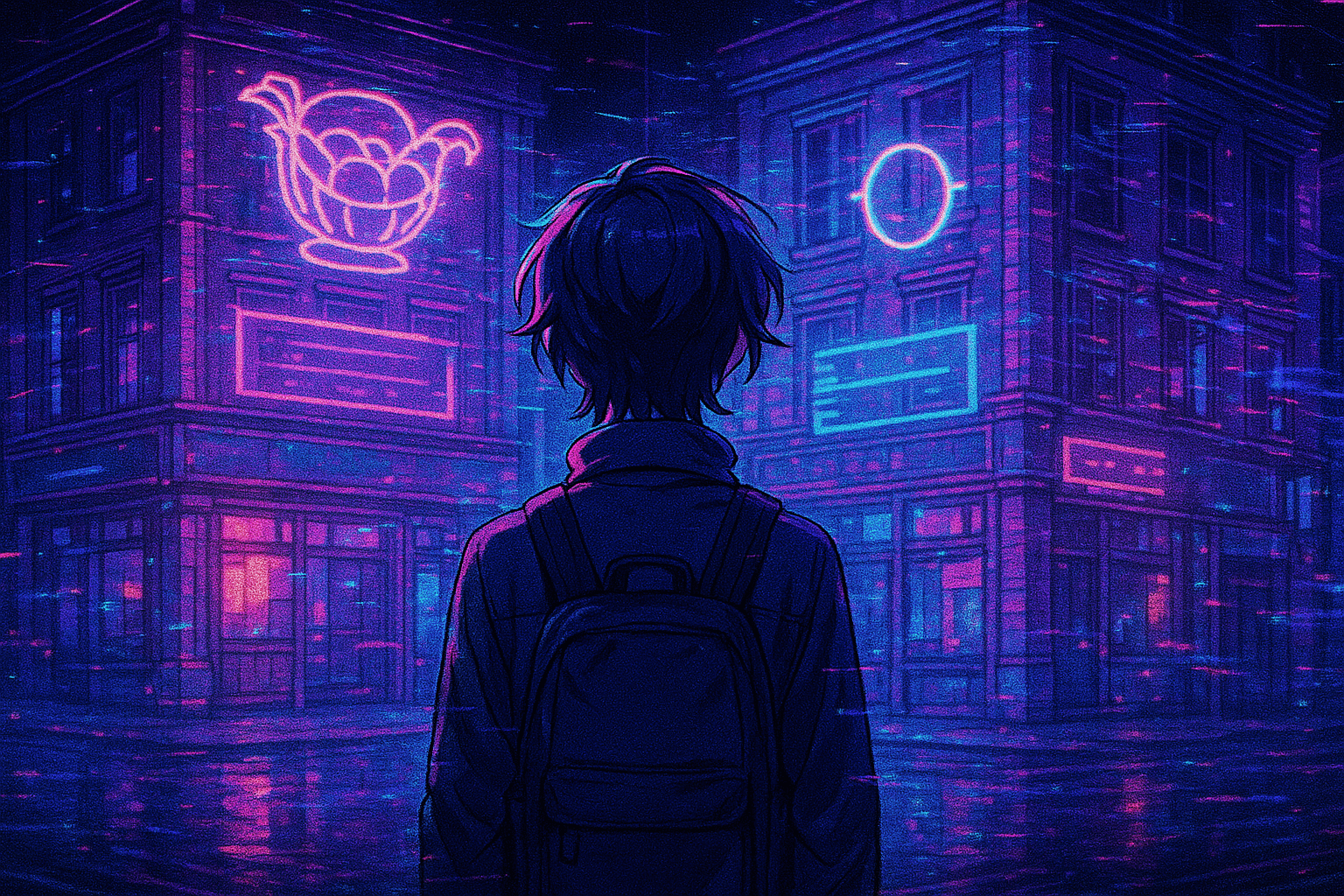
    “Ha ha, Fruit of the Loom never had a cornucopia!”

    “Berenstein was always Berenstain!”

    Yeah, okay. Sure.

    Or—and hear me out—maybe you and I came from a version of reality where things were spelled differently, shaped differently, said differently…

    Because something nudged us into a different branch.

    The Mandela Effect isn’t weird because people disagree.
    It’s weird because the disagreements are too specific, too consistent, and too global.


    1. Fruit of the Loom: The Missing Cornucopia

    The debate of all debates.

    • Millions remember the cornucopia.
    • Design experts remember it.
    • Kids remember it from school shopping trips.

    But in this timeline?

    It never existed.

    This isn’t “faulty memory.”
    It’s a branding shift across worlds.


    2. “Mirror, Mirror” vs. “Magic Mirror”

    You remember it.

    Your parents remember it.

    Every parody ever made remembers it.

    The line was:
    “Mirror, mirror on the wall…”

    Except it wasn’t.

    Now it’s:
    “Magic mirror on the wall…”

    We didn’t all hallucinate the same pop culture reference.

    We carried it here from a version where that line was real.


    3. The Monopoly Man’s Missing Monocle

    He had one.
    You know he had one.
    Everyone knows he had one.

    Except… here he doesn’t.

    Funny thing?

    • Costumes include monocles.
    • Cartoons parody the monocle.
    • Marketing spoofs rely on the monocle.

    You don’t parody something that never existed.


    4. Febreze vs. Febreeze

    The name has one “e.”
    Not two.

    But millions remember “Febreeze.”

    • Not “mispronunciation.”
    • Not “misreading.”
    • Not “bad memory.”

    What’s more likely?

    Millions hallucinated the same vowel…
    Or the spelling changed after a timeline merge?


    5. “Luke, I Am Your Father” Never Happened?

    One of the most quoted movie lines in history…
    …apparently never existed.

    Now the line is:
    “No. I am your father.”

    So every parody, every reference, every comedian, every TV show got it wrong?

    Or maybe we’re remembering the version from the branch we came from.


    6. The Berenstein/Berenstain Rift

    This is the “gateway drug” of Mandela Effects.

    “Berenstein Bears” was normal.

    “Berenstain Bears”… wasn’t.

    The shift didn’t feel like a spelling correction.

    It felt like waking up in a reality where something small — but fundamental — had changed.


    7. Pikachu’s Tail (The Phantom Black Tip)

    People remember Pikachu having a black-tipped tail.

    Except here… Pikachu’s tail is 100% yellow.

    Why does this matter?

    Because this kind of detail sticks in childhood memory.
    It doesn’t just appear out of nowhere.


    8. Jif vs. Jiffy Peanut Butter

    “Jiffy” was everywhere.

    People remember it. Ads remember it. School lunches remember it.

    But now?

    Jif only.

    And we’re told Jiffy never existed.

    Okay, but then where did the memories come from?


    9. Curious George’s Missing Tail

    This one is wild because people vividly remember:

    • George swinging from his tail
    • George grabbing objects with his tail
    • George using it for balance

    But this version of George?

    No tail. Never had one.

    So millions of childhood memories are just… wrong?


    10. New Zealand Moved… Again

    If you’ve ever looked at a map and felt like the continents rearranged themselves overnight… you’re not alone.

    New Zealand is the king of “geographic Mandela Effects.”

    • Some remember it northeast of Australia
    • Some remember it far southeast
    • Some swear it was closer

    Either everyone skipped the same geography class…
    or the map changed after a branch shift.


    So What’s Really Happening?

    You can call them “false memories.”

    You can call them “cultural confusion.”

    But the patterns? Too sharp.
    The consistency? Too global.
    The details? Too exact.

    These don’t feel like mistakes.

    They feel like footprints.

    From a version of reality we aren’t in anymore.


    Interactive: Which Mandela Effect Hit You the Hardest?

    Drop yours in the comments:

    • The Monopoly monocle
    • The missing cornucopia
    • Berenstein vs. Berenstain
    • Febreeze/Febreze spelling
    • Pikachu’s tail
    • Your own personal “wait a minute…” moment

    Your story might match someone else’s.
    That alone is… interesting.


    Final Thought: The Universe Keeps Its Secrets Poorly

    The Mandela Effect isn’t proof of madness.

    It’s proof of memory.

    Not the memory of this timeline—

    The memory of the one before.


    Want the Full Picture?

    Grab your free guide:

    10 Paradoxes That Break Reality

  • When Anime Predicts Reality: 10 Scenes That Hit Too Close to Home

    When Anime Predicts Reality: 10 Scenes That Hit Too Close to Home

    When Anime Predicts Reality: 10 Scenes That Hit Too Close to Home

    You’re scrolling through Netflix in 2025.
    You find an anime from 2011.
    Within 5 minutes, you’re watching yesterday’s news play out on screen.
    The anime came first.
    How did they know?


    You’ve felt it.

    That moment where an anime scene freezes you mid-episode because it’s not just similar to current events—

    It’s identical.

    The plot that mirrors last week’s headlines.
    The character who acts exactly like that politician you saw trending.
    The dystopia that looks suspiciously like your news feed.

    At first, you think: “Coincidence.”

    Then it happens again.
    And again.
    And again.

    You start to wonder:

    Did anime predict the future?
    Or did reality plagiarize anime?

    Here are 10 examples that’ll make you question which came first—
    the fiction or the timeline we’re living in.


    1. Attack on Titan — The Cycle of Violence We Can’t Escape

    Aired: 2013
    Predicted: Every political conflict since

    Watch any season of AOT.
    Then watch the news.
    Now tell me which one is fiction.

    The pattern AOT showed us:

    • Oppression → Rebellion → Retaliation → Oppression
    • Fear used as a political weapon
    • History rewritten by whoever holds power
    • “They started it” from both sides simultaneously
    • The cycle never actually breaks—it just changes costumes

    The real-world parallels are so specific it’s uncomfortable:

    • Walls built out of fear (physical and ideological)
    • Propaganda making “the other” seem inhuman
    • Young people sacrificed for old people’s wars
    • Both sides convinced they’re the victim
    • The truth buried under generations of lies

    AOT didn’t predict one conflict.

    It predicted the structure of how modern conflicts play out.

    And if you’ve been paying attention to literally any geopolitical situation in the last decade…

    The parallels are impossible to ignore.

    The anime came out in 2013.
    It’s 2025.
    The pattern hasn’t changed.
    Almost like someone wrote the playbook and everyone decided to follow it.


    2. Psycho-Pass — We’re Already Living in the Sibyl System

    Aired: 2012
    Predicted: 2020s surveillance state (with better branding)

    In Psycho-Pass, society judges you based on your “Crime Coefficient”—
    a number calculated by scanning your mental state.

    Sound ridiculous?

    Let me tell you what your phone did in the last 24 hours:

    • ✓ Tracked your location every 30 seconds
    • ✓ Analyzed your typing patterns to detect stress
    • ✓ Predicted what you’ll search for before you search it
    • ✓ Determined your emotional state from screen time
    • ✓ Built a behavioral profile more accurate than you realize

    Now check what’s happening in the real world:

    • Predictive policing algorithms — already deployed in major cities
    • Social credit systems — active in multiple countries
    • Mental health screening via metadata — insurance companies are interested
    • Pre-crime detection — not science fiction anymore

    The difference between Psycho-Pass and reality?

    In the anime, you see the scanner.
    In reality, it’s invisible.
    You’re carrying it in your pocket.

    Psycho-Pass showed us a dystopia where the system knows you better than you know yourself.

    We’re not heading there.
    We’re already there.
    We just call it “personalization.”

    The anime warned us in 2012.
    We thought it was science fiction.
    Turns out it was a documentary with a 10-year delay.


    3. Steins;Gate — When Reality Feels Edited

    Aired: 2011
    Predicted: The Mandela Effect going mainstream

    Steins;Gate’s core concept: Send one text message to the past, and the entire present rewrites itself.

    Small change → Massive ripples → New timeline.

    Only one person remembers the “old” reality.
    Everyone else thinks it’s always been this way.

    Now…

    How many times have you experienced this:

    • A memory that doesn’t match “official” history
    • People acting slightly wrong, like NPCs with updated scripts
    • News events you SWEAR went differently
    • That feeling that reality “shifted” overnight
    • Collective memories that conflict with recorded facts

    The internet calls it the Mandela Effect.

    Steins;Gate called it worldline divergence.

    Either way, something feels off.

    Specific examples that Steins;Gate predicted:

    • Timeline inconsistencies: We all have memories that don’t align with “what happened”
    • Information warfare: Controlling the past by controlling the present narrative
    • Butterfly effect on steroids: One tweet changing an election, one post starting a movement
    • Gaslighting at scale: “That never happened” becoming a political strategy

    In 2011, Steins;Gate showed us a world where:

    → The past isn’t fixed
    → History can be rewritten
    → Only some people notice
    → Everyone else thinks you’re crazy

    Sound familiar?

    Social media didn’t just connect us.
    It gave us the ability to collectively remember differently.

    We’re not in one timeline anymore.
    We’re in millions of personalized timelines, all claiming to be “reality.”

    Steins;Gate wasn’t fiction.
    It was a warning about information fragmentation disguised as time travel.


    4. Death Note — Power Doesn’t Corrupt, It Reveals

    Aired: 2006
    Predicted: What happens when ordinary people get extraordinary platforms

    Light Yagami didn’t “become” evil.

    He was always like that.

    The Death Note just gave him the power to act on it.

    Now think about the last decade of social media:

    • Give someone a million followers → Watch their true self emerge
    • Give someone anonymity → See what they actually believe
    • Give someone a platform → They’ll show you who they really are

    Death Note predicted the psychology of virality:

    • The god complex — “I have the right to decide who deserves what”
    • The justice obsession — “I’m the good guy, therefore my actions are justified”
    • The slippery slope — “Just this once” becoming “this is who I am now”
    • The cult of personality — Followers who worship the concept, not the person

    Every influencer scandal.
    Every cancelled celebrity.
    Every politician who “changed.”

    They didn’t change.
    They just got their Death Note.

    In 2006, this was about a magical murder notebook.
    In 2025, the notebook is called Twitter, Instagram, TikTok.

    Different tools.
    Same psychology.
    Same result.

    Death Note showed us: Power doesn’t corrupt.
    Power is the x-ray that reveals what was always there.

    We just weren’t paying attention.


    5. Parasyte — Nature’s Violent Correction

    Aired: 2014
    Predicted: Ecosystem collapse forcing adaptation (or extinction)

    Parasyte’s premise: Humanity pushed too hard, and nature evolved a response.

    Alien parasites that take over human bodies.
    Not to conquer Earth.
    To balance it.

    The parasites’ logic:

    “Humans are the invasive species. We’re the correction.”

    Now check the current timeline:

    • ✓ Microplastics in every living organism (including you)
    • ✓ Antibiotic-resistant bacteria evolving faster than we can respond
    • ✓ Climate tipping points being crossed in real-time
    • ✓ Ecosystems collapsing, new diseases emerging
    • ✓ Nature adapting to human presence in ways we didn’t predict

    Parasyte didn’t predict aliens.

    It predicted nature fighting back through evolution.

    The anime’s key question:

    “What if humans aren’t the apex predator anymore?”

    Real-world answer forming:

    “We’re about to find out.”

    Every superbug that resists treatment.
    Every invasive species thriving in new climates.
    Every pandemic we didn’t see coming.

    That’s not bad luck.
    That’s nature adapting to an environment dominated by one species.

    Parasyte showed it with body-snatching aliens.
    Reality shows it with viruses, bacteria, and ecosystem shifts.

    Different aesthetics.
    Same principle:
    Nature always balances. Whether we like the method or not.


    6. Serial Experiments Lain — The Internet Becomes More Real Than Reality

    Aired: 1998 (Yes, 1998)
    Predicted: Digital identity eclipsing physical identity

    Lain asked in 1998:

    “What if your online self becomes more real than your physical self?”

    In 2025, we stopped asking.
    We just accepted it.

    • Your digital reputation matters more than your character
    • People know your online persona better than the real you
    • Your internet presence outlives your physical presence
    • “Chronically online” isn’t an insult—it’s a demographic

    Lain predicted:

    • The line between online and offline disappearing
    • Digital spaces feeling more “home” than physical spaces
    • Identity becoming fluid and performance-based
    • Reality bending to consensus rather than facts
    • The internet as a collective consciousness we can’t escape

    The anime came out before Google.

    Before social media.

    Before smartphones.

    And it STILL predicted:

    → You scrolling instead of sleeping
    → Your personality shaped by algorithms
    → Your existence validated by engagement metrics
    → The physical world feeling less real than the feed

    Lain didn’t predict the internet.
    It predicted us becoming the internet.

    And we did.
    Willingly.


    7. Akira — Youth Rage Against a System They Didn’t Build

    Released: 1988
    Predicted: Generational anger in a pre-collapsed society

    Akira takes place in 2019.
    A society rebuilt after destruction, but hollow.
    Corrupt leaders. Biker gangs. Youth with power and nowhere to direct it.

    Sound like any recent years?

    • Massive wealth gap while cities crumble
    • Youth protests met with military-level responses
    • Leaders who don’t understand the generation they govern
    • Underground movements born from being ignored
    • Anger as the default emotion for anyone under 30

    Akira’s 2019 showed:

    → A government more interested in control than governance
    → Young people with abilities the system fears
    → Rebellion not as ideology but as survival
    → The city as a pressure cooker ready to explode

    Actual 2019-2025 showed:

    → Global youth movements (climate strikes, protests, revolutions)
    → Systems that prioritize stability over change
    → Generational wealth gaps wider than ever
    → Young people radicalized not by ideology but by impossibility

    Akira was set in Neo-Tokyo.

    But the vibe?
    Pick any major city in 2020-2025.

    The anime didn’t predict the events.
    It predicted the feeling.
    And the feeling is everywhere.


    8. Code Geass — One Person, One Power, Global Consequences

    Aired: 2006
    Predicted: How easily empires crumble when one person has the right tool

    Lelouch gets the Geass: The power to command absolute obedience.

    One power.
    One person.
    Entire empires restructured.

    Now think about the 2020s:

    • One tweet from Elon Musk moves markets
    • One whistleblower leaks documents, governments scramble
    • One influencer changes cultural conversations overnight
    • One person with the right platform = disproportionate power

    Code Geass predicted the psychology of asymmetric power:

    • ✓ You don’t need an army if you have influence
    • ✓ One person with leverage can rewrite the rules
    • ✓ Systems are fragile when centralized power meets decentralized actors
    • ✓ The right message at the right time = revolution

    Lelouch commanded people directly.
    Modern influencers command through algorithms.

    Different mechanics.
    Same result:
    One person → Massive impact → Unintended consequences.

    Code Geass wasn’t about magic powers.
    It was about what happens when influence becomes weaponized.

    We’re living in that world now.
    The Geass is just called virality.


    9. Eden of the East — Giving Money to Strangers to Save Society

    Aired: 2009
    Predicted: Crowdfunding, UBI experiments, and billionaires playing savior

    The premise: 12 people are given 10 billion yen and told to “save Japan.”

    No rules.
    No oversight.
    Just money and a mission.

    Some try to fix infrastructure.
    Some manipulate society.
    Some just… experiment.

    Sound familiar?

    • Tech billionaires “solving” problems governments can’t
    • Crowdfunding campaigns replacing social safety nets
    • UBI experiments run by private citizens, not countries
    • Effective Altruism as a movement
    • “Philanthropy” that looks suspiciously like social engineering

    Eden of the East asked:

    “What if random people with money tried to fix society?”

    2020s answered:

    “Let’s find out in real-time.”

    Every GoFundMe for medical bills.
    Every billionaire promising to solve homelessness.
    Every experiment in giving people money “to see what happens.”

    That’s not new.
    Eden of the East showed us this playbook in 2009.

    We’re not watching the anime anymore.
    We’re living the social experiment it described.


    10. Neon Genesis Evangelion — Loneliness as the Default Human State

    Aired: 1995
    Predicted: Social isolation in a hyper-connected world

    Evangelion’s thesis:

    We’re surrounded by people but completely alone.

    Everyone wants connection.
    No one knows how to achieve it.
    So we build walls (AT Fields) and call it self-protection.

    Fast-forward to 2025:

    • 8 billion people on Earth
    • Loneliness declared a public health crisis
    • More “connections” than ever, less connection than ever
    • Phones full of contacts, nobody to call

    Evangelion predicted:

    • Technology creating distance while promising connection
    • People unable to communicate even when they desperately want to
    • Emotional walls becoming defense mechanisms we can’t lower
    • The paradox of being seen by millions yet known by none

    Shinji’s struggle wasn’t fighting angels.

    It was being honest about needing people in a world that punishes vulnerability.

    In 1995, this felt like character drama.

    In 2025, this feels like the defining psychological condition of our time.

    Evangelion didn’t predict robots and aliens.

    It predicted us:
    Surrounded by connection.
    Dying of loneliness.
    Unable to bridge the gap.

    And it hurts because it’s true.


    The Pattern: Anime Doesn’t Predict the Future—It Notices the Present

    Here’s what’s actually happening:

    Anime creators aren’t prophets.
    They’re just extremely good at pattern recognition.

    They see:

    • ✓ Where current trends are heading
    • ✓ What technology enables psychologically
    • ✓ How power dynamics actually work
    • ✓ What humans do when constraints are removed

    Then they ask:

    “What happens if we push this 10 years forward?”

    The result looks like prediction.
    But it’s actually just paying attention.

    Western media often asks: “What if we had different technology?”
    Anime asks: “What if we had different technology… but the same human nature?”

    That’s why it hits harder.
    That’s why it feels prophetic.
    That’s why you’re reading this article nodding.

    Because anime didn’t predict the future.

    It predicted us.


    Your Turn: What Did I Miss?

    These are my 10.
    But there are more.
    Way more.

    Drop in the comments:

    • Which anime predicted something you’ve personally experienced?
    • What scene made you pause and think “wait… this is happening NOW”?
    • What show warned us that we completely ignored?

    Bonus points if you can cite the episode and the real-world parallel.

    Let’s build the complete list together.

    Because if there’s one thing this article proves…

    We should probably start paying closer attention to what anime is showing us.

    The warnings are there.
    We just keep treating them as entertainment.


    Final Thought: Fiction Is a Mirror, Not a Crystal Ball

    Anime doesn’t predict the future.

    It reflects the trajectory we’re already on.

    Every “prediction” in this article?
    The seeds were already planted when the anime aired.

    The creators just had the vision to see where those seeds would grow.

    We dismissed it as fiction.
    They documented it as inevitability.

    So next time you’re watching anime and something feels too real…

    Don’t brush it off.

    That’s not déjà vu.

    That’s not coincidence.

    That’s someone who saw the pattern before you did.

    And they tried to warn you.

    The question is:
    Will you listen this time?


    Want More Reality-Bending Parallels?

    This is just the beginning of connecting fiction to reality.

    Get the guide that breaks down paradoxes, predictions, and patterns:

    Download: 10 Paradoxes That Break Reality

    Free guide • Anime references • Mind-expanding content
  • Are We Living in the Wrong Timeline? Anime Clues That Suggest a Split

    Are We Living in the Wrong Timeline? Anime Clues That Suggest a Split

    Did We Switch Timelines? (And Why Anime Fans Noticed First)

    That unsettling whisper in the back of your mind—that something fundamental has shifted.
    No cataclysm, no alien invasion, no Matrix glitch on the news. Just quiet, persistent moments
    that make you question your own memory.


    You’ve felt it.

    A conversation you know already happened. A news story that feels like a rerun. A life decision that feels more like remembering than choosing.

    Your brain keeps asking: “When exactly did we switch timelines?”

    Anime has been exploring this exact phenomenon for decades—branching worlds, alternate choices, and universes diverging off one tiny moment.

    If fiction tends to predict reality… maybe we aren’t imagining the glitch.


    Anime Has Been Warning Us About Timeline Splits for Years

    Anime creators aren’t just dabbling in timeline fractures—they’re obsessed with them.

    • Steins;Gate: One text rewrites the universe.
    • Attack on Titan: Future choices reshape the past.
    • Re:Zero: Save-points feel like corrupted timelines.

    These aren’t just plot devices. They treat timeline switching as something natural. Expected. Routine.

    So why does anime feel like it’s describing our world instead of escaping it?


    The Mandela Effect: Mass Delusion or Mass Migration?

    • “Luke, I am your father” (never said)
    • Fruit of the Loom cornucopia (never existed)
    • Berenstain vs Berenstein
    • Febreze vs Febreeze

    If entire groups remember the same wrong details… is it hallucination?

    1. Mass hallucination? (unlikely)
    2. Memory glitch? (boring)
    3. A universe with terrible version control

    Or maybe: We aren’t in the same timeline we started in.


    Déjà Vu: Your Brain Remembering Another Route

    What if déjà vu isn’t confusion?

    What if it’s remembering?

    A scene from a branch that no longer exists. A moment from Version 1.0 that the universe quietly patched.

    Anime treats déjà vu like memory bleed from another world line.


    Why Reality Feels Increasingly Scripted

    • Sudden plot twists nobody saw coming
    • People acting like archetypes
    • Villains with timed redemption arcs
    • World events that feel like filler episodes
    • Social trends that cycle like reused storylines

    If real life feels repetitive… maybe the story engine behind our timeline is glitching.


    The Split Timeline Theory (Simple Version)

    Timeline A: The one you remember.

    Timeline B: The one we woke up in without noticing.

    • Foods taste different
    • People don’t remember what you remember
    • Life paths veer sideways
    • History feels… edited
    • Events escalate unnaturally fast
    • Your inner timeline no longer matches external reality

    Anime calls this a branch.
    Science calls it temporal bifurcation.
    You call it: “Something feels off.”


    The Real Question Isn’t “If” — It’s “When”

    • Major world events that felt too scripted
    • A personal moment that felt “out of character”
    • People acting like strangers wearing familiar faces
    • Memories no one else shares
    • A sense of unreality
    • Feeling like you’re watching your life instead of living it

    Anime shows timeline shifts as subtle, emotional ripples—not fireworks.


    So Are We in the “Wrong” Timeline?

    • A different branch
    • A universal detour
    • A reboot after something broke
    • A correction that went sideways
    • An overflow timeline
    • The version where something glitched and we crossed over

    Your gut has been whispering it for years.


    Final Thought: If It Feels Like You Switched Timelines… Maybe You Did

    This isn’t conspiracy thinking. It’s pattern recognition.

    Anime doesn’t just entertain—it prepares us. It reflects truths we sense before we have words for them.

    You’re early. Not alone.


    Want to Go Deeper?

    Download the free guide:

    10 Paradoxes That Break Reality (Explained Simply)

  • This Feels Like a Rerun: Why Reality Sometimes Feels Scripted

    This Feels Like a Rerun: Why Reality Sometimes Feels Scripted

    This Feels Like a Rerun: Why Reality Sometimes Feels Scripted

    If you’ve ever paused mid-moment and thought,
    “Didn’t we… already do this?”
    — you’re not alone, and you’re not imagining it.


    The Paradox Recap is built for people who notice the weird overlaps — the places where reality feels less like chaos and more like someone quietly reusing storyboards.

    Moments like:

    • A news headline that feels like a scrapped anime plot
    • A meme from years ago suddenly becoming the template for current events
    • A situation that plays out beat-for-beat like a scene you’ve already lived

    This isn’t about proving a grand theory.

    It’s about paying attention to the parts of reality that feel just a little too… rehearsed.


    The Feeling You Can’t Quite Shake

    Most people brush off that déjà-vu-adjacent sensation as
    “just my brain being weird.”

    But if you’re here, you’ve probably had at least one of these:

    • You watch a show and think, “This feels more like a forecast than fiction.”
    • You see patterns recycle across politics, social media, or relationships
    • Someone behaves exactly like a character archetype you’ve seen a hundred times
    • You get a subtle Mandela-Effect poke: “Wait — I remember this differently.”

    Individually these moments are ignorable.

    Together? They start to feel like a pattern the story itself is pretending not to show.


    Story Logic vs. Real-World Logic

    Fiction has rules — even the wildest anime or multiverse film sticks to its internal logic:

    • Characters follow arcs
    • Worlds “glitch” for specific reasons
    • Paradoxes hint at something bigger happening

    Real life allegedly doesn’t have that.

    And yet:

    • We repeat the same cultural cycles with different skins
    • The same archetypes appear in different people
    • Events mirror stories we grew up on — almost too closely
    • Entire fandoms predict behavior better than experts

    It’s not that we’re in a simulation.

    It’s that the overlap between timelines, tropes, and human behavior is too interesting to ignore.


    Why “This Feels Like a Rerun” Hits So Hard

    This sensation usually shows up in three forms:

    1. Timeline Echo

    You see something and your brain whispers:
    “We’ve done this arc before.”

    2. Character Repeat

    Different person. Different setting.
    Same archetype.

    • “Charismatic leader”
    • “Chaotic neutral friend”
    • “NPC-energy coworker”

    3. Scene Recreation

    You walk into a room and it feels staged — the blocking, the energy, the framing.

    Not déjà vu —
    more like awareness of the scene you just entered.


    So What *Is* The Paradox Recap?

    In one sentence:

    A commentary hub for people who see anime logic, narrative patterns, and glitchy timelines hiding inside everyday reality.

    In practice, it looks like:

    • Anime & Story Breakdowns — control, choice, loops, endings
    • Paradox Deep Dives — déjà vu, Mandela Effects, contradictions
    • Reality vs Story Commentary — real-world arcs and roles
    • What-If Experiments — narrative logic applied to real life

    Not to claim truth.

    But to sharpen the questions.


    You’re Not “Crazy.” You’re Just Paying Attention.

    When you notice these patterns, people love to say:

    • “You’re overthinking.”
    • “You watch too much anime.”
    • “It’s all coincidence.”

    Sure — humans are pattern-seekers.

    But there’s a difference between spiraling into paranoia and quietly observing the script.

    The Paradox Recap is the second one.

    “Okay, am I the only one seeing this pattern… or is the timeline doing something weird again?”


    How to Explore This Site Without Getting Lost

    Start in layers — from light curiosity to full-on timeline analyst.

    Layer 1 – Light Curiosity

    Just browsing. Follow your interests. Bookmark the things that make you pause.

    Layer 2 – Pattern Watching

    Download the free guide:
    “10 Paradoxes That Break Reality.”

    Use it like a field manual whenever something feels… off.

    Layer 3 – Timeline Analyst

    You’re the friend people go to for weird moments.

    Dive into paradox loops, archetypes, and glitch logs.


    If This Feels Like a Rerun, You’re in the Right Place

    You’ve probably already lived one of these:

    • A life chapter that replayed with small edits
    • A conversation you predicted beat-for-beat
    • A fictional moment that felt truer than reality

    You don’t need to decide what any of it means yet.

    Just start here.
    Stay curious.
    Track the patterns.

    Because if reality insists on behaving like a rerun…
    we might as well start keeping recaps.


    Start Your Pattern-Spotting Journey

    Download “10 Paradoxes That Break Reality”